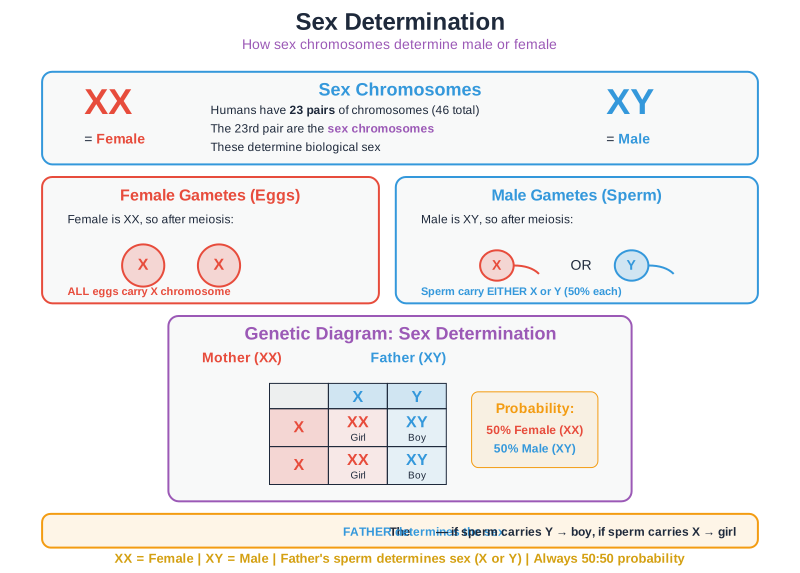
Remember: XX = female, XY = male | Father determines sex (passes X or Y) | 50% chance of each sex
This diagram covers Visual: Sex Determination within Sex Determination for GCSE Biology. Sex chromosomes and sex determination mechanisms It is section 3 of 11 in this topic. Focus on the labels, the relationships between parts, and the explanation that turns the diagram into an exam-ready answer.
Practice questions for Sex Determination
What determines the sex of a human baby?
Use a genetic diagram to show how sex is inherited in humans.
Quick recall flashcards
How do you remember XX = female and XY = male?
XX: the two X's look like chromosomes that pair up perfectly — females have a matching pair. XY: the Y looks like a little man standing with arms out — males have the odd one out. 'Why are boys different? Because of Y!'
What sex chromosomes do females and males have?
Females: XX (two X chromosomes). Males: XY (one X and one Y chromosome). These are the 23rd pair of chromosomes in humans.