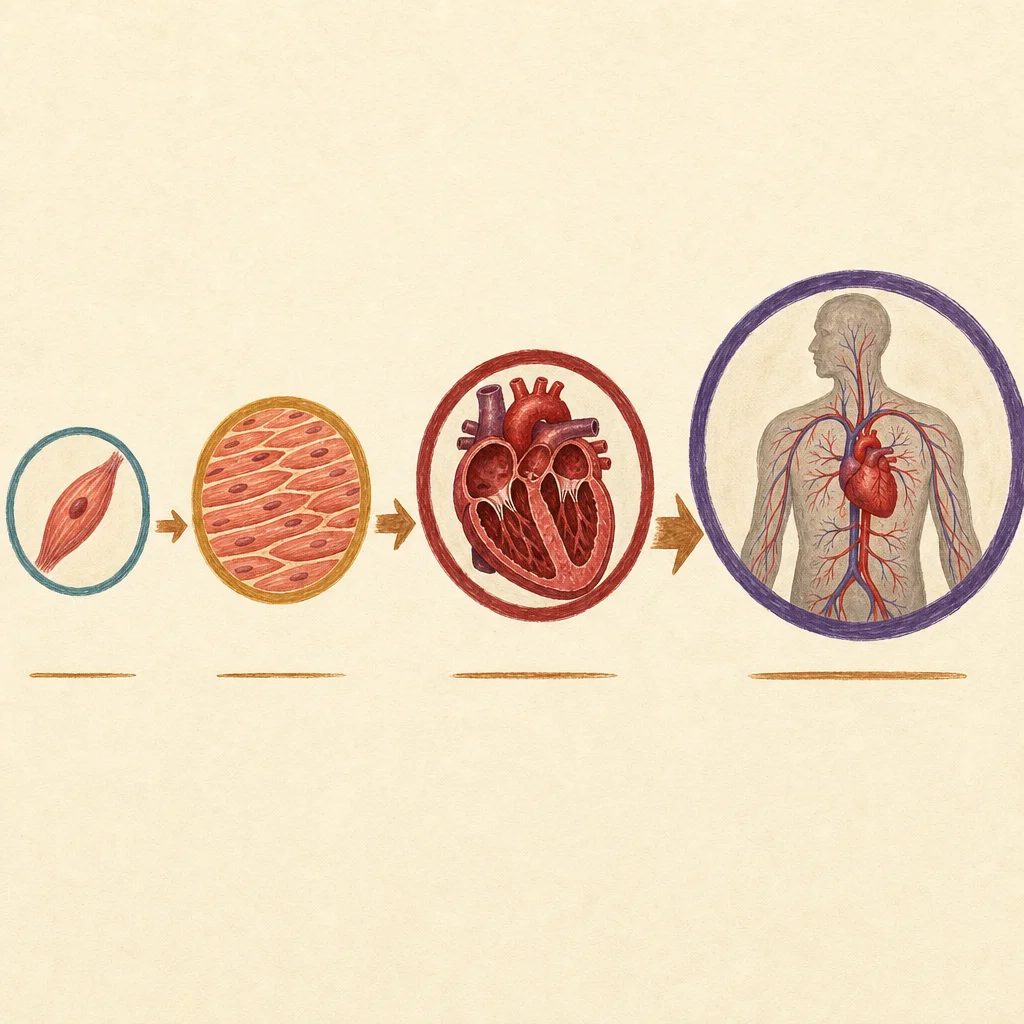
Figure 1: Levels of biological organisation — cells form tissues, tissues form organs, organs form systems.
This diagram covers Levels of Organisation — Cell → Tissue → Organ → System within Tissues, Organs and Organ Systems for GCSE Biology. Organizational hierarchy from cells to organ systems, tissue types in plants and animals, structure-function relationships, and system interactions It is section 2 of 15 in this topic. Focus on the labels, the relationships between parts, and the explanation that turns the diagram into an exam-ready answer.
Practice questions for Tissues, Organs and Organ Systems
What is the correct order of biological organisation from simplest to most complex?
Describe the functions of glandular tissue and epithelial tissue in animals.
Quick recall flashcards
What is an organ?
A group of different tissues working together to perform a specific function.
What is a tissue?
A group of similar cells that work together to perform a specific function.