3.6 Fundamentals of Cyber SecurityDiagram

Malware Taxonomy

Part of Types of Malware · GCSE GCSE Computer Science revision

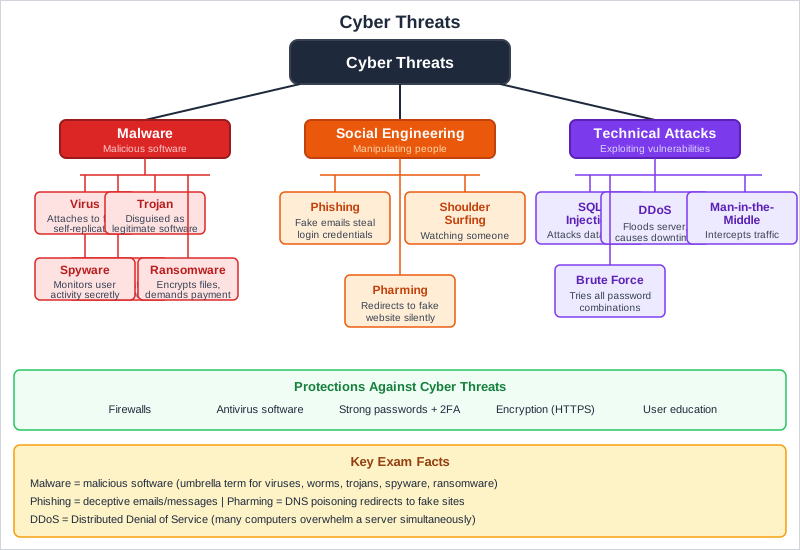
This diagram covers Malware Taxonomy within Types of Malware for GCSE Computer Science. Revise Types of Malware in 3.6 Fundamentals of Cyber Security for GCSE Computer Science with 15 exam-style questions and 15 flashcards. This is a high-frequency topic, so it is worth revising until the explanation feels precise and repeatable. It is section 2 of 9 in this topic. Focus on the labels, the relationships between parts, and the explanation that turns the diagram into an exam-ready answer.

Topic position

Section 2 of 9

Practice

15 questions

Recall

15 flashcards

Malware Taxonomy

Malware taxonomy diagram showing six types of malicious software: Virus (attaches to files, spreads via user action), Worm (self-replicating, spreads automatically through networks), Trojan (disguised as legitimate software, creates backdoor), Ransomware (encrypts files, demands payment), Spyware (monitors activity, steals data), and Adware (displays unwanted advertisements)

Keep building this topic

Read this section alongside the surrounding pages in Types of Malware. That gives you the full topic sequence instead of a single isolated revision point.

Practice Questions for Types of Malware

Which type of malware attaches itself to a legitimate file and requires user action to spread?

  • A. Worm
  • B. Virus
  • C. Trojan
  • D. Ransomware
1 markfoundation

Explain how a Trojan horse works.

2 marksstandard

Quick Recall Flashcards

15 questions on Types of Malware — practise free

Instant marking, adaptive difficulty, and 15 spaced repetition flashcards. Free until your GCSEs.

Try PrepWise Free