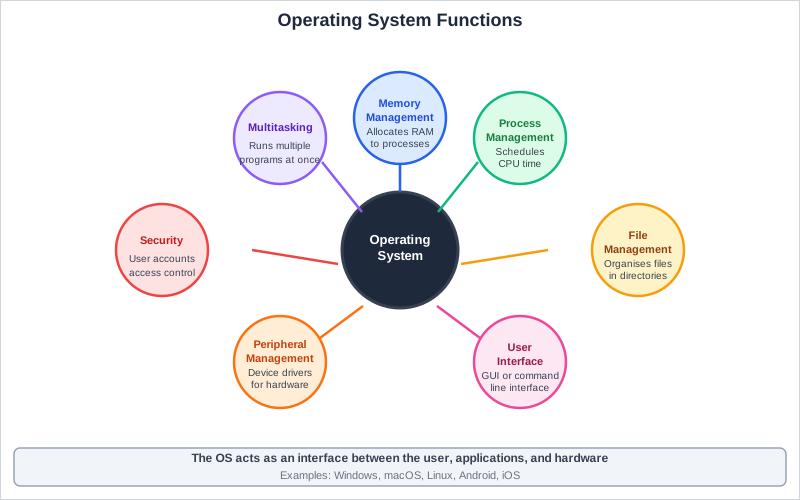
Operating System Functions Overview

Part of Operating Systems · Section 2 of 9

DiagramUnit: 3.4 Computer SystemsGCSE

This diagram covers Operating System Functions Overview within Operating Systems for GCSE Computer Science. Revise Operating Systems in 3.4 Computer Systems for GCSE Computer Science with 15 exam-style questions and 10 flashcards. This is a high-frequency topic, so it is worth revising until the explanation feels precise and repeatable. It is section 2 of 9 in this topic. Focus on the labels, the relationships between parts, and the explanation that turns the diagram into an exam-ready answer.

Operating System Functions Overview

Operating system functions diagram showing the OS at the centre managing six key functions: Memory Management (allocating RAM, virtual memory), Processor Scheduling (multitasking, time-slicing), File Management (folders, access control), Device Management (drivers for hardware), User Interface (GUI and CLI), and Security (user accounts, access control), with the OS acting as an intermediary between applications and hardware

Practice questions for Operating Systems

Which of the following best describes the role of an operating system?

  • A. A program that allows users to browse the internet
  • B. Software that manages hardware and software resources and provides services to programs
  • C. A type of application software used for word processing
  • D. A programming language used to write other software
1 markfoundation

Explain how an operating system manages memory.

2 marksstandard

Quick recall flashcards

What does CLI stand for?
Command Line Interface
What does GUI stand for?
Graphical User Interface

15 questions on Operating Systems — practise free

Instant marking, adaptive difficulty and spaced-repetition flashcards — all aligned to your exam board.

Start revising free →