Stack and Queue: Stacks use LIFO (last in, first out). Queues use FIFO (first in, first out).

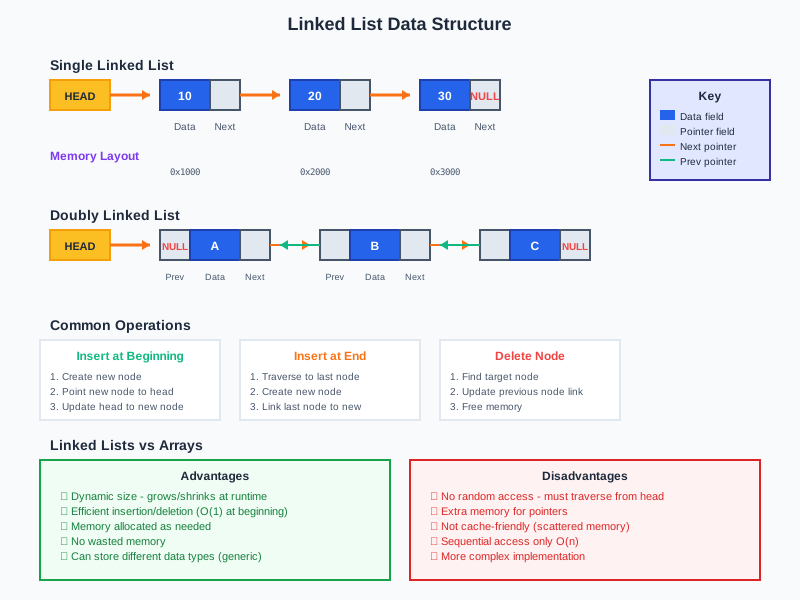
Linked List: Items are connected by pointers, so insertion and deletion can be efficient.
Binary Tree: A hierarchical structure where each node can have up to two children.

This diagram covers Data Structures (Extension) within Data Types for GCSE Computer Science. Revise Data Types in 3.2 Programming for GCSE Computer Science with 19 exam-style questions and 10 flashcards. This is a high-frequency topic, so it is worth revising until the explanation feels precise and repeatable. It is section 4 of 9 in this topic. Focus on the labels, the relationships between parts, and the explanation that turns the diagram into an exam-ready answer.
Practice questions for Data Types
Which data type is most appropriate for storing a student's age?
A programmer is creating a system to track gym members. State the most appropriate data type for each of the following and justify your choice: (a) the member's surname, (b) the number of visits this month, (c) whether the membership is active.