ProgrammingDiagram

Data Types Reference

Part of Data TypesGCSE Computer Science

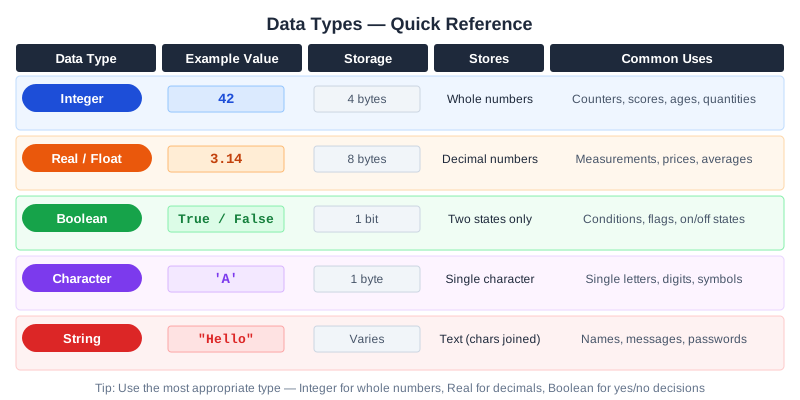
This diagram covers Data Types Reference within Data Types for GCSE Computer Science. Revise Data Types in Programming for GCSE Computer Science with 15 exam-style questions and 10 flashcards. This topic appears less often, but it can still be a useful differentiator on mixed-topic papers. It is section 3 of 8 in this topic. Focus on the labels, the relationships between parts, and the explanation that turns the diagram into an exam-ready answer.

Topic position

Section 3 of 8

Practice

15 questions

Recall

10 flashcards

Data Types Reference

Data types reference diagram showing five GCSE programming data types: Integer (whole numbers, examples -5, 0, 42), Real/Float (decimal numbers, examples 3.14, 19.99), String (text in quotes, examples Hello, Alice), Character (single character in apostrophes, examples A, 7), and Boolean (true or false only), with memory usage and typical use cases for each

Keep building this topic

Read this section alongside the surrounding pages in Data Types. That gives you the full topic sequence instead of a single isolated revision point.

Practice Questions for Data Types

Which data type is most appropriate for storing a student's age?

  • A. String
  • B. Boolean
  • C. Integer
  • D. Real
1 markfoundation

A programmer is creating a system to track gym members. State the most appropriate data type for each of the following and justify your choice: (a) the member's surname, (b) the number of visits this month, (c) whether the membership is active.

3 marksstandard

Quick Recall Flashcards

What data type is 42?
Integer
What is type casting?
Converting data from one type to another

Want to test your knowledge?

PrepWise has 15 exam-style questions and 10 flashcards for Data Types — with adaptive difficulty and instant feedback.

Join Alpha