Systems ArchitectureDiagram

Fetch-Decode-Execute Cycle

Part of Fetch-Decode-Execute CycleGCSE Computer Science

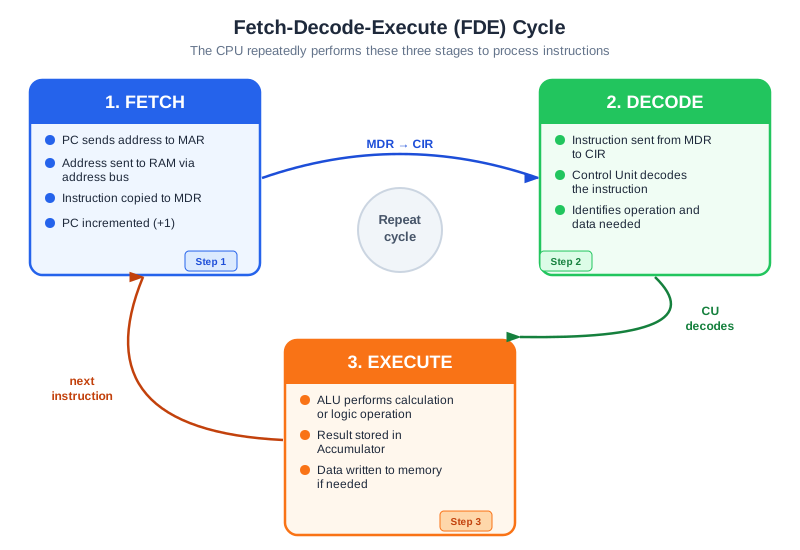
This diagram covers Fetch-Decode-Execute Cycle within Fetch-Decode-Execute Cycle for GCSE Computer Science. Revise Fetch-Decode-Execute Cycle in Systems Architecture for GCSE Computer Science with 15 exam-style questions and 12 flashcards. This topic appears regularly enough that it should still be part of a steady revision cycle. It is section 2 of 9 in this topic. Focus on the labels, the relationships between parts, and the explanation that turns the diagram into an exam-ready answer.

Topic position

Section 2 of 9

Practice

15 questions

Recall

12 flashcards

Fetch-Decode-Execute Cycle

Fetch-Decode-Execute cycle diagram showing the three stages: Fetch (PC to MAR, memory to MDR to CIR, PC increments), Decode (Control Unit interprets CIR), and Execute (ALU performs operation, result to Accumulator), with arrows showing the repeating cycle

Keep building this topic

Read this section alongside the surrounding pages in Fetch-Decode-Execute Cycle. That gives you the full topic sequence instead of a single isolated revision point.

Practice Questions for Fetch-Decode-Execute Cycle

What does FDE stand for in computer science?

  • A. Find, Delete, Execute
  • B. Fetch, Decode, Execute
  • C. Fetch, Decode, Evaluate
  • D. Format, Decode, Execute
1 markfoundation

Describe the three stages of the FDE cycle.

3 marksstandard

Quick Recall Flashcards

What are the three stages of the FDE cycle?
Fetch, Decode, Execute (repeats continuously)
What does FDE stand for?
Fetch-Decode-Execute

Want to test your knowledge?

PrepWise has 15 exam-style questions and 12 flashcards for Fetch-Decode-Execute Cycle — with adaptive difficulty and instant feedback.

Join Alpha